The backdrop is one of those things people don’t think about until it goes wrong. A wrinkled sheet behind a portrait, a background color that clashes with someone’s outfit, or a backdrop that’s too narrow for a group photo can drag down an otherwise great image. The right one, on the other hand, barely gets noticed. It just makes the person or product in front of it look better.
We swap backdrops constantly at our Queens studio depending on who walks through the door, and the choice always comes down to a few practical questions about the subject, the look, and how the backdrop will be used. If you’re trying to decide which photography backdrop to buy or set up for your next shoot, here’s how we’d approach it.
Start With What You’re Photographing
Before you get into materials and colors, it helps to think about what you’ll be photographing most. A backdrop that works well for headshots might not be big enough for full-length fashion shots, and what you’d use for a newborn session probably won’t suit product photos for an online store.
For headshots, the background only has to cover the space behind someone’s head and shoulders, so a smaller portable backdrop is usually plenty. Full-body portraits and group shots are different. You’ll want something wide and tall enough to stretch behind everyone and run down onto the floor. With product photos, most people want a smooth, plain surface so nothing pulls attention away from what they’re selling. Figuring out which of these you’ll use most will narrow your options pretty quickly.
Seamless Paper Backdrops
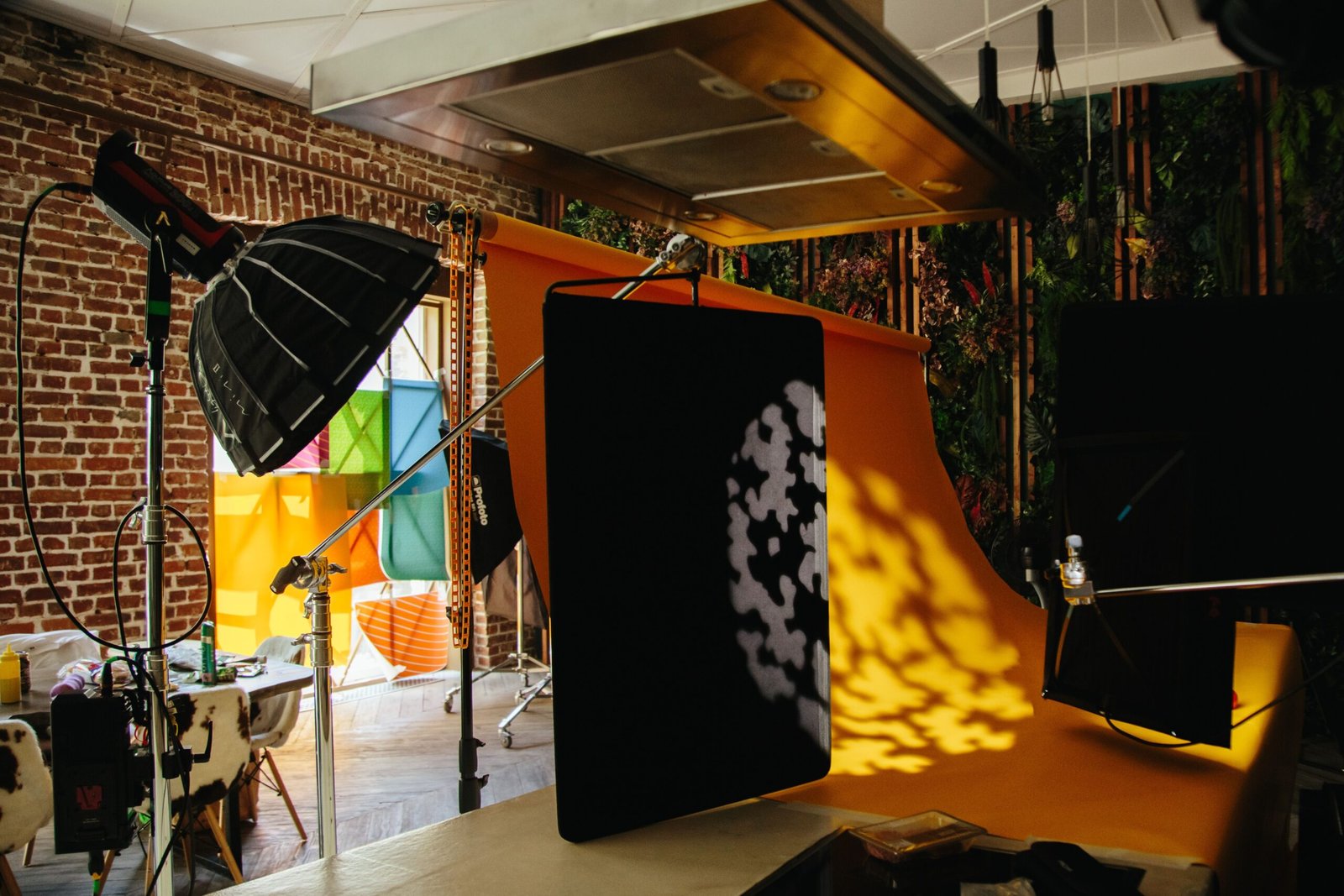
Seamless paper is the workhorse of most professional studios, including ours. It comes on long rolls that you hang from a stand and pull down to the floor, creating a smooth curve with no visible line where the wall meets the ground. That’s where the name comes from, and it’s why subjects on seamless can look like they’re floating in a clean, endless space.
The biggest advantages are consistency and color choice. Savage Universal, one of the best-known paper makers, offers dozens of colors in its seamless line, so you can match almost any mood or brand. When the bottom of the roll gets scuffed or dirty, you simply cut off the used section and roll down a fresh piece.
Seamless paper does have a couple of drawbacks. The rolls are long and clumsy to carry, and the paper rips and wrinkles easily, especially on the floor where people stand. Even so, it’s a great choice for studio headshots, product photos, fashion shoots, and any session where you want a clean, polished look.
Muslin and Other Fabric Backdrops
Fabric backdrops, especially cotton muslin, are softer and a little more forgiving than paper. You can fold one up and throw it in a bag, and many can go right in the washing machine when they get dirty. Hand-dyed or mottled muslins give the background a soft, painted look, which is great for family portraits, maternity photos, or any shoot where you want something warm and classic.
The catch is wrinkles. As B&H’s backdrop guide points out, a garment steamer is almost essential if you’re using fabric, and thinner materials like muslin can look slightly see-through when light hits them from behind. Some photographers lean into the wrinkles and folds for a relaxed look, but if you want a perfectly smooth background, fabric takes more work to get there.
Vinyl Backdrops
Vinyl sits somewhere between paper and fabric. It’s durable, reusable, and resists wrinkles, so it hangs flat and looks the same every time you roll it out. It’s also easy to wipe clean, which makes it a favorite for shoots with toddlers, pets, food, or anything that might leave a mess.
That consistency also helps businesses. If a company wants every employee’s portrait to match, even when new hires are photographed months apart, a vinyl backdrop makes that simple. The trade-offs are weight and price. Vinyl is heavier than paper or muslin, so it’s less convenient for location work, and it usually costs more up front. Look for a matte finish, since glossy vinyl can reflect your lights and create shiny hot spots.
Painted Canvas Backdrops
Hand-painted canvas is the premium option. These backdrops have rich, layered texture and color that give portraits a timeless, almost old-master quality. Many famous portrait photographers have used them for decades, and a good canvas can instantly make a session feel high-end.
They’re also the most expensive and delicate choice. The painted surface needs careful handling, and one-of-a-kind or custom canvases can cost a lot. For most people, a canvas makes sense once portraits are a regular part of their work and they want a signature look that sets them apart.
Collapsible Backdrops
Collapsible backdrops are fabric panels stretched over a flexible frame that folds down into a small circle. They pop open in seconds, take up very little space, and are great for on-location headshots, like photographing a team in their office. Because they’re relatively small, they aren’t ideal for full-body shots or groups, but for quick head-and-shoulders portraits they’re hard to beat.
Choosing a Backdrop Color
If you’re only going to own one or two backdrops, neutral colors give you the most flexibility. White is bright, clean, and popular for product photos and cheerful portraits. Black creates drama and makes subjects stand out, especially with side lighting. Gray is the most versatile, since it rarely clashes with clothing or skin tones.
Gray has another advantage that surprises many beginners. Depending on how much light you put on it, a medium gray backdrop can look light gray, charcoal, or nearly black in the final image. If you add colored gels to a light aimed at the background, it can even take on a blue, purple, or orange tint. One gray roll can cover many looks.
For headshots in particular, keep the background calm so attention stays on the face. We cover this in more detail in our guide to the LinkedIn headshot, where soft grays and muted blues tend to work best for professional profiles.
Getting the Size Right
Size matters more than most people expect. Seamless paper is commonly sold in roughly 4.5-foot and 9-foot widths, with wider rolls available for bigger studios. The narrower size is fine for headshots and small products, but for anything full-length or with more than one person, the wider roll is usually the better choice.
Think about your lens and how far you’ll stand from the subject. Wider lenses see more of the background, so you’ll need a bigger backdrop to fill the frame. Ceiling height matters too. A backdrop needs enough vertical room to hang above the subject’s head and still sweep onto the floor, and a low ceiling can limit what fits.
Think About Where the Backdrop Will Live
It’s easy to fall in love with a backdrop and forget that you’ll need somewhere to hang it and somewhere to keep it. Most backdrops go up on a pair of light stands with a crossbar between them, which is simple and portable. If you have a dedicated space, a wall-mounted system lets you keep several rolls ready and pull down whichever one you need. Spring-loaded poles that brace between the floor and ceiling are a good middle ground when floor space is tight.
Storage deserves the same thought. Here in New York, where a spare room is a luxury, a closet full of nine-foot paper rolls isn’t realistic for many people. Store paper standing upright so the rolls don’t warp or flatten. You can fold fabric into a bag, and collapsible panels slide under a bed. If space is limited, it often makes sense to own one versatile backdrop you’ll actually set up rather than several you’ll avoid because they’re a hassle to pull out.
Leave Room Between the Subject and the Backdrop
Whatever backdrop you choose, where you place your subject changes how it looks. If someone stands right up against the background, their shadow will land on it, and any wrinkles or texture will show up sharply. Moving them a few feet forward softens the backdrop, reduces shadows, and gives you more control over how bright or dark the background appears.
Planning helps here too. Our post on getting your studio ready covers the setup work that makes backdrop changes quick and painless on shoot day.
Pick the Backdrop That Fits How You Work
No single backdrop is perfect for everyone. If you mostly shoot headshots in a studio, a gray or white seamless roll is hard to beat. If you travel to clients, a collapsible panel or a folded muslin will save you a lot of hassle. For a durable, repeatable look for business portraits, vinyl is worth the investment; for portraits that feel like art, a painted canvas is the way to go.
If you’d rather skip the gear decisions entirely, our photo services include studio sessions with a full range of backdrops already set up and ready to go.