Family formals usually get planned around a shot list and a clock. When a grandparent, sibling, parent, or one of the newlyweds uses a wheelchair, the plan needs one more layer, because the standard lineup of everyone standing shoulder to shoulder puts that person at a different height from the rest of the group. Wheelchair users and caregivers already trade plenty of advice about accessible venues and long event days through communities like Rolling Health Revolution, yet posing tends to get left out of the conversation. The fixes are simple, and most of them come down to where the camera sits and how the family arranges itself around that person.
This comes up more often than couples expect. According to the CDC, 12.2 percent of U.S. adults have a mobility disability involving serious difficulty walking or climbing stairs. On a guest list of 150, there’s a good chance at least one person in your family photos uses a manual chair every day, relies on a power chair, or needs a transport chair for long events like a wedding.
Get the Camera Down to Their Eye Level
Most of the awkwardness in these photos comes from lens height. A photographer standing at full height and shooting a mixed group points the camera slightly downward, and that angle shrinks anyone who’s seated while making the footrests, wheels, and frame look bigger at the bottom of the image. Dropping the camera to about chest height of the standing guests, or to the seated person’s eye level for smaller groups, levels everything out. The wheelchair user ends up looking straight into the lens instead of up at it, and that direct eye line is what makes a portrait feel like it’s about them.
A good photographer will do this without being asked, but it’s still worth bringing up during planning. Don’t be surprised if your photographer spends the family portrait block on one knee. The same idea carries into the reception, where shooting candids from a seated angle keeps the person’s face as the strongest part of the frame.
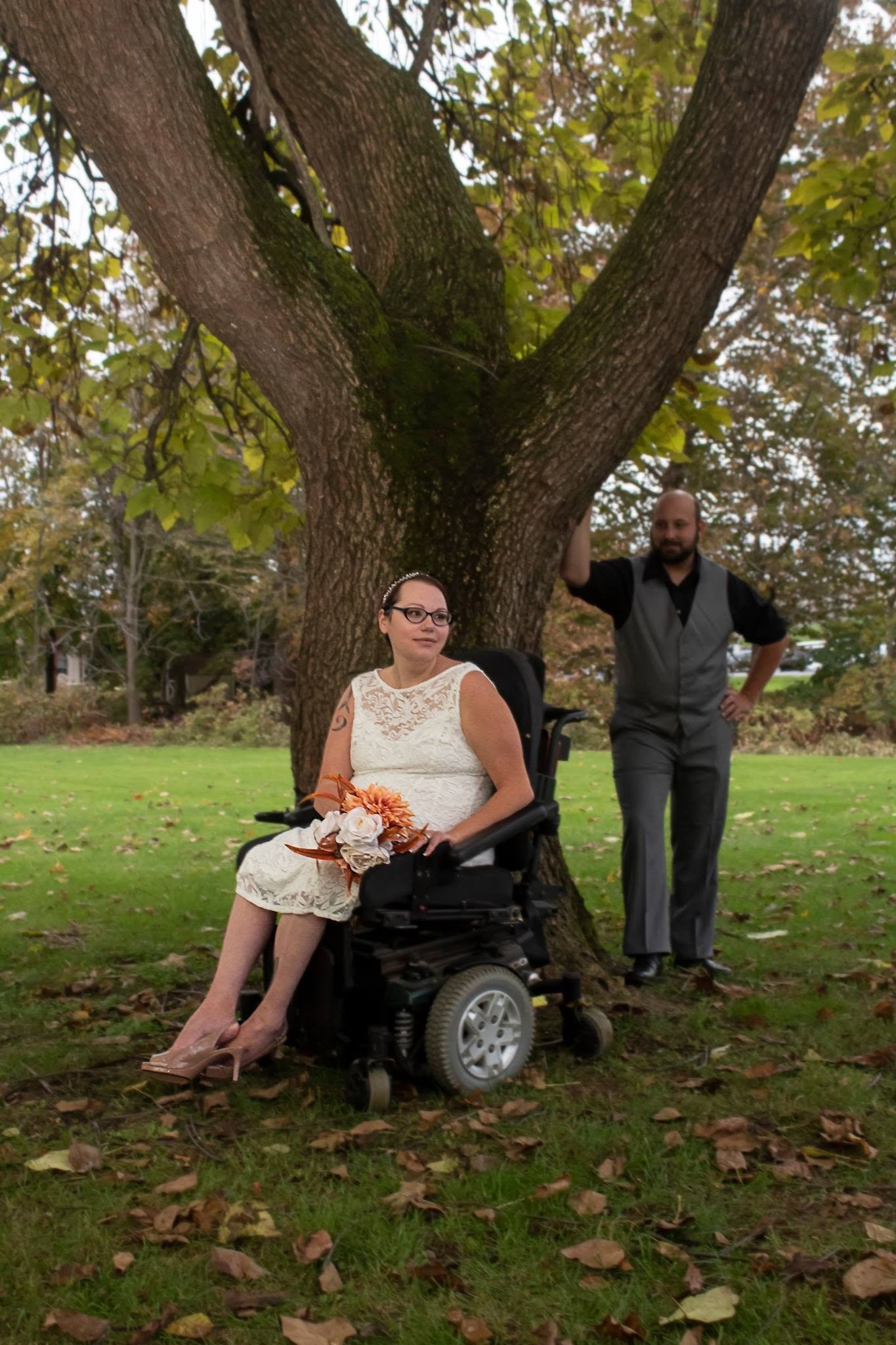
Build the Group Around the Person
The quickest way to make a wheelchair the focal point is to line everyone up standing and park the chair at the end of the row. The chair becomes the one odd shape in a straight line, and the eye goes right to it. Placing the person at the center, or just off center, and then building the group outward with a mix of heights changes the whole feel of the photo.
Ask a few relatives to sit on chairs or a bench beside them, have a couple of kids sit on the ground in front, and put taller family members in the back row leaning slightly in. Once the faces form a loose triangle or staggered tiers, the chair reads as one seated position among several. A hand resting on a shoulder or an arm linked at the elbow ties the person into the group physically, so they look connected to the people around them.
When the Bride or Groom Uses a Wheelchair
For couple portraits, the standing partner can sit on a bench, kneel, or lean down so both faces are close together at the same height. Some couples also like a few frames with the standing partner on the wheelchair user’s lap, if the chair and the person’s body are comfortable with it, and those usually produce the most relaxed smiles of the day. Talk through which poses feel natural to both of you ahead of time so your photographer isn’t guessing on the day.
Angle the Chair and Clear the Frame
Turning the chair about 30 to 45 degrees toward the camera, and having the person turn their shoulders back toward the lens, moves the wheels and push handles toward the edge of the frame. Photographers use that same angle for seated portraits of anyone, so it won’t look staged. It also creates a more flattering body line than a straight-on shot does.
It pays to glance at what’s hanging on the chair, too. Backpacks on the push handles, a water bottle, a phone mount, or a spare cushion fade into the background in daily life and then show up clearly in a printed 16-by-20. Anything removable can come off for a few minutes and go right back once the group shots are finished.
Keep in mind that plenty of wheelchair users see their chair as part of who they are and want it in the picture. A full-length frame with the chair fully visible is often exactly right. Ask the person what they prefer, and get a mix of full-length and waist-up crops so the family has options.
Ask Before Anyone Moves the Chair
Well-meaning relatives, and sometimes photographers, grab the push handles to scoot someone a few inches. Disability etiquette guidance from the University of Pittsburgh notes that people consider their equipment part of their personal space and recommends speaking directly to the person rather than to a companion or aide. Anyone who needs to adjust the chair’s position should ask first, follow the person’s directions, and give posing instructions to them directly.
Family members standing behind the chair also tend to rest their hands on the push handles out of habit. In photos, that grip can look like they’re about to wheel the person away. A hand on the shoulder works much better and reads as affection.
Choose Level Ground and Schedule Their Photos Early
Soft grass, gravel paths, and sloped lawns make positioning harder, and on a slope a manual chair can creep forward mid-shot. A patio, flat pavement, or a level spot indoors is usually the better call for group photos. Direct summer sun on a dark metal frame also gets hot, which matters if the group needs a few minutes to get organized.
Sitting in formal clothes for hours can be tiring, and some wheelchair users need regular pressure relief breaks. Scheduling that person’s family groups at the start of the formals, instead of making them wait through every combination of cousins, keeps them comfortable and gets their best expressions while everyone’s still fresh. Let your photographer know about any break schedule ahead of time, and they can build it right into the portrait timeline.
Put Their Name on the Shot List
Write the person’s name at the top of your family shot list with a short note about their preferences, such as favorite poses, whether they can transfer to a bench, or equipment they’d like set aside. Share it with your photographer a few weeks out and ask how they usually handle seated subjects in group portraits. A photographer who answers with specifics about camera height and group arrangement has done this before, and your family photos will show it. For help with the rest of a long wedding day, from staying comfortable in the chair to planning around breaks, the adaptive health guides at Rolling Health Revolution are a practical place to start.